Hover over the title of each session to see a full description, and hover over the name of each presenter to read their bio.
View the digital Conference Program HERE.
PURCHASE THE RECORDINGS
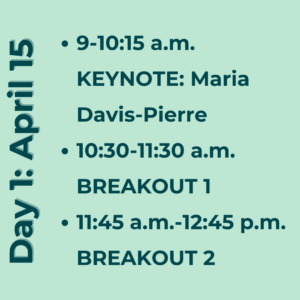
This session explores how implicit bias influences the diagnosis and care of autistic individuals, particularly Black children who are often misdiagnosed or overlooked. Participants will examine how racial and cultural assumptions shape clinical decisions and learn strategies to advocate for equitable, culturally responsive care that affirms neurodiversity.
Maria Davis-Pierre (she/her), LMHC, is a licensed mental health counselor, autistic adult, and founder of Autism in Black®. As a mother of three neurodivergent children, she brings lived experience and clinical expertise to her work supporting Black families navigating autism. Through workshops, training, and advocacy, Maria challenges stigma, centers cultural context, and equips communities with tools for change. Her work has been featured in Forbes, The New York Times, USA Today, BET, and PBS, and she has partnered with major organizations like Microsoft to promote equity at the intersection of race and disability.
Session 1- Practical Support Strategies & Approaches for Educators of Neurodivergent Learners presented by Nicole Ogren (she/her)
Session 2- Improving Autism-Related Clinical Care: Lessons Learned from University-Community Partnerships with Somali Community Organizations presented by Casey Burrows (she/her), Munira MaalimIsaq (she/her), Fatima Molas (she/her), and Mahdi Warsama (he/him)
Session 1- Redefining Leadership: Beyond Neurotypical Models presented by Aaron Flicker (they/them)
Session 2- From Awareness to Belonging: Closing the Social Reciprocity Gap presented by Robin McLeod (she/her)
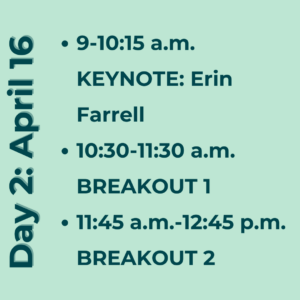
In this keynote session, participants will learn about specific practices for educators, practitioners, and parents to use that help learners to celebrate their autistic and neurodivergent joy, individuality, and special interests. The examples given not only help to celebrate autistic and neurodivergent joy, but are evidence-based practices that are practical to implement and support across multiple environments. Resources will also be shared to access additional learning.
Dr. Erin Farrell (she/her/hers) is the Autism Specialist for the Minnesota Department of Education, an educator, an adjunct professor, a Licensed Behavior Analyst, and a parent of neurodivergent children. Dr. Farrell has been in the field of autism for over 25 years in a variety of roles prior to coming to the State, including paraprofessional, behavior therapist, educator, and District Behavior Specialist. Dr. Farrell has published work and research in book chapters, peer-reviewed research, and others in a variety of topics such as autism, inclusive education, diversity, and hip-hop education. Dr. Farrell has presented at multiple local, national, and international conferences in both special education and behavior analysis and enjoys collaborating with colleagues locally, nationally, and internationally.
Session 1- Beyond PBIS: Rewiring Classrooms Through Regulation, Relationship, and Respect presented by Rebecca Engle (she/her)
Session 2- The Caregiver’s Survival Guide to Mental Wellness presented by Louis Scarantino (he/him)
Session 1- The Spectrum: Bridging the Gap between All Kinds of Autistics presented by Sam Stein (they/them)
Session 2- Coaching Parents Toward Self-Reflection: Building Stronger Connections with Neurodivergent Children presented by Alyssa Norenberg (she/her) and Oana Zayic (she/her)