Statement on Immigration and Customs Enforcement Activity in Minnesota
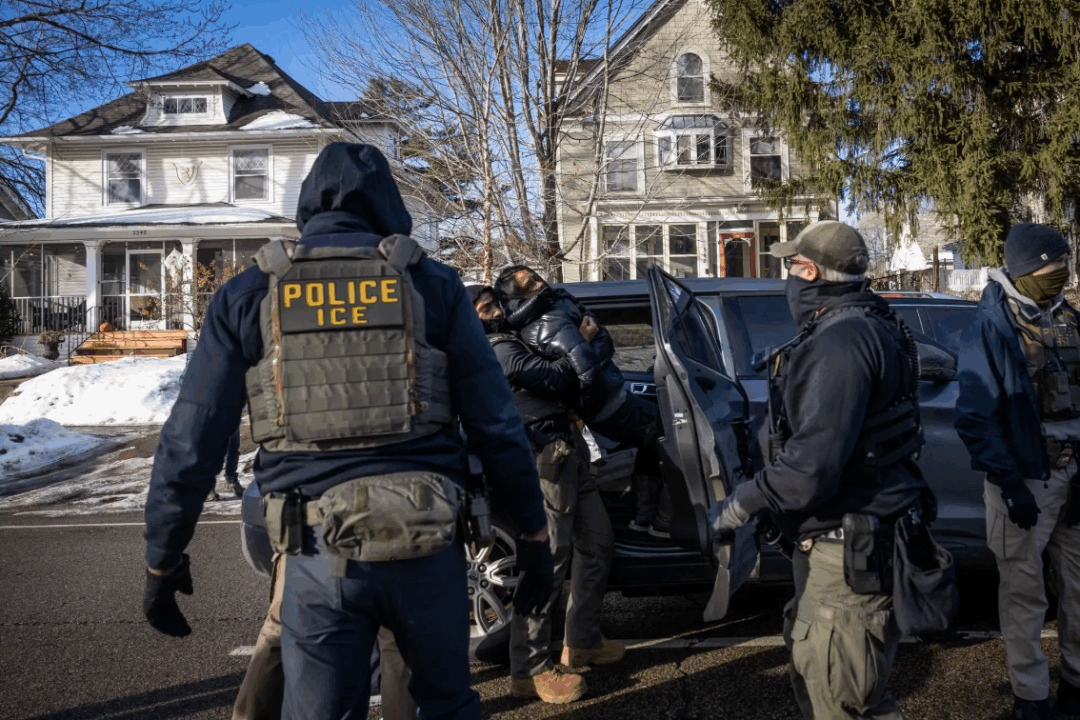
On Tuesday, January 13, Minnesota Public Radio shared a story on its social media page showing video of a woman in visible distress as she was pulled from her car, cut from her seatbelt, tackled forcefully, and carried to an unmarked vehicle by four masked ICE agents in South Minneapolis. As she was carried — suspended above the ground by her arms and legs — she can be heard clearly stating: “I am autistic and have a brain injury,” “I am disabled, trying to go to the doctor up there,” “It takes me a second to understand,” and “I am disabled and need accommodations.”
In separate social media videos posted by others, the woman is ultimately identified by name, and civilian reports confirm that she was detained and released by approximately 6:00 p.m. on Tuesday. She is confirmed to be a U.S. citizen.
Context from multiple posts and videos indicates that the woman, who is autistic and was driving alone, turned onto a street in South Minneapolis as part of her usual route to her doctor’s office. Based on her statements, it is presumed that she encountered an area heavily occupied by ICE activity but did not deviate from her route. She was subsequently approached by officers who accused her of obstructing their activity with her vehicle.
In addition to widespread concern regarding the tactics demonstrated by ICE agents in this and other known incidents in Minnesota, the Autism Society of Minnesota is deeply troubled by the heightened vulnerability of citizens with autism and other invisible disabilities amid the ongoing tension between community members and ICE.
It is well documented and nationally recognized that autistic individuals, as a direct function of their diagnosis, may experience significant difficulty during interactions with law enforcement due to differences in communication, processing speed, tolerance for the unexpected, and sensory overload—independent of intelligence or intent.
Autistic people are often known to adhere to established routines or plans, despite apparent disruptions, and require additional time to process verbal instructions, particularly when under stress. Some autistic people lose the ability to plan speech or movement when overwhelmed, frightened, or confused. Autistic people are often encouraged by authorities to disclose their disability to law enforcement or emergency responders, who may misinterpret their behavior as defiance.
The woman depicted in the MPR story exhibits numerous indicators of the real and well-documented vulnerabilities that autistic individuals may experience during law enforcement encounters. These vulnerabilities are so widely recognized that the Minnesota Peace Officer Standards and Training (POST) Board requires all licensed peace officers in the state to complete four hours of training focused on recognizing and appropriately supporting autistic individuals to improve safety and community outcomes. Officers must recertify every three years to maintain their licensure.
The interaction observed and recorded between the woman and ICE agents in the MPR story demonstrates no apparent acknowledgment of, or competency in, responding to a disclosed disability or de-escalating an interaction involving a vulnerable individual. Federal immigration agents are not held to, trained in, or motivated by the standards Minnesota expects of law enforcement officers interacting with disabled community members.
The Autism Society of Minnesota is deeply concerned for all autistic individuals, who are statistically estimated to be 7–12 times more likely to encounter law enforcement due to disability-related processing differences. We advise autistic adults and families to exercise extreme caution in areas of ICE activity throughout Minnesota, regardless of any intent to exercise First Amendment rights.
Finally, we call upon our city and state leaders to consider this specific risk — among many others — as ICE continues to perpetuate harm through a range of deeply concerning interactions with diverse members of our community. Our community deserves safety and access to systems informed by best practices.